

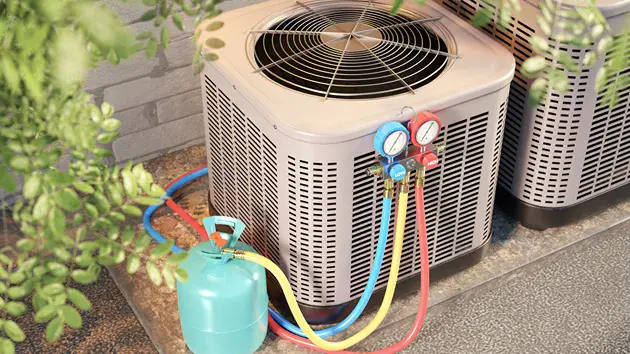
Running an air conditioner with low refrigerant can allow the system to keep operating temporarily, but doing so can place unnecessary strain on the equipment and may lead to more serious damage. A low refrigerant level, sometimes described as a low charge, is not simply a matter of the system needing a routine refill.
Refrigerant should circulate within a properly sealed system, so a low charge can indicate a leak or another underlying problem that needs professional attention.
Understand What Low Refrigerant Does To An AC Unit
Low refrigerant in an AC unit can interfere with the system’s ability to absorb and transfer heat effectively. As the refrigerant charge drops, the air conditioner may struggle to produce the expected cooling, causing longer run times and less comfortable indoor temperatures.
The system may continue operating even when its refrigerant level is insufficient. That can make the problem easy to overlook, particularly if the air conditioner still produces some cool air. Continued operation, however, may increase stress on components and make an existing issue more costly to address.
Recognize The Warning Signs Of A Low Charge
Homeowners may notice several changes when an air conditioner develops a refrigerant problem. These symptoms can have other causes, so they should not automatically be treated as proof of a refrigerant leak, but they can indicate that professional diagnosis is appropriate.
- Reduced Cooling: The system struggles to reach the desired indoor temperature
- Longer Run Times: The air conditioner operates for extended periods without adequately cooling the home
- Ice Formation: Frost or ice may develop on refrigerant lines or other components
- Higher Energy Use: Longer operating cycles can contribute to increased electricity consumption
How Long Can I Run My Air Conditioner With Low Refrigerant?
There is no reliable number of hours or days that an air conditioner can safely run with low refrigerant. The severity of the low charge, outdoor temperature, system design, and condition of the equipment can all affect what happens next.
Instead of trying to determine how long the system can continue operating, it is generally better to have the problem diagnosed as soon as possible. Continuing to run an AC with a suspected refrigerant problem can increase the likelihood of additional wear or damage, particularly during periods of heavy cooling demand.
Why A Refrigerant Leak Needs More Than A Recharge
Refrigerant does not normally get consumed during ordinary air conditioner operation. If the charge is low, there may be a leak somewhere in the system that needs to be located and addressed.
Adding refrigerant without investigating the cause may provide temporary improvement while leaving the underlying problem unresolved. A qualified HVAC technician can evaluate the system, identify potential leaks, assess operating conditions, and determine the appropriate repair.
Understand The Risk Of Damage From Low Refrigerant
One of the primary concerns with operating an AC system with insufficient refrigerant is that components may operate outside their intended conditions. Depending on the system and circumstances, prolonged operation can contribute to excessive strain, reduced performance, or compressor problems.
Separate Low Refrigerant From Other AC Problems
Not every air conditioner that blows warm air has low refrigerant. Dirty filters, restricted airflow, electrical problems, thermostat issues, failing components, and other mechanical concerns can produce similar symptoms.
Trying to diagnose refrigerant levels based only on indoor temperature or airflow can therefore be misleading. Proper testing allows a technician to determine whether the system actually has a low charge and whether another problem is contributing to the symptoms.
Know When To Stop Running The System
If an air conditioner is showing strong signs of malfunction, continued operation may not be worth the risk. Particularly concerning symptoms include ice buildup, unusual noises, repeated shutdowns, poor cooling during extreme heat, or evidence that the system is operating abnormally.
- Ice On The System: Turn off cooling and arrange for professional evaluation
- Severe Performance Loss: Avoid forcing the system to run continuously when it cannot maintain comfort
- Unusual Noises: Have unexpected mechanical sounds investigated promptly
- Repeated Cycling: Schedule diagnosis when the system repeatedly starts and stops without normal cooling
Get Professional Help For Low Refrigerant Problems
Simply Cooling, Heating & Plumbing helps Las Vegas homeowners diagnose and address air conditioning problems, including suspected refrigerant issues. If you’re concerned about low refrigerant in your AC unit, our 24/7 service can help determine what is causing the problem and whether repair or other service is appropriate.